
“Policy debates can drift into the abstract,” says Cathryn Stout ’03, director of strategic communications for the American Civil Liberties Union (ACLU) of Tennessee. “But when you bring a mother’s voice, when you bring the voice of someone who’s fighting on the front line, it brings the story back down to earth.”
When the federal Memphis Safe Task Force began conducting sweeping law enforcement operations in Memphis in September 2025, two Wellesley College alums stepped up to support the targeted communities. Stout works to bring public attention to the experiences of affected families through her position at the ACLU. Meanwhile, Maria Oceja ’15, co-founder of the grassroots organization Vecindarios 901, helps immigrant families work through the immediate consequences of the enforcement actions—be it finding basic necessities or locating loved ones who have been detained. The group’s work recently reached a national audience through an NPR story when Stout connected reporters with Oceja and others on the front lines.
For Stout, the crisis in her hometown is personal. When she returned to Memphis in 2021 after several years away, she found the city facing challenges that would only intensify with the arrival of the task force. The Trump administration’s presidential memorandum called this a collaborative anti-crime effort, but civil rights advocates have condemned the operation, which created a spike in Immigration and Customs Enforcement (ICE) traffic stops, as an immigration effort that disproportionately targets people of color and working-class neighborhoods—resulting in the detention and deportation of individuals with no prior criminal convictions. By its first anniversary in late September this year, officials had reported more than 13,300 arrests.
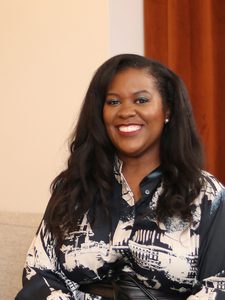
Stout says she couldn’t sit by and do nothing, especially when she felt that her streets, neighbors, and community were under attack. At the ACLU of Tennessee, which has filed a lawsuit defending citizens’ First Amendment rights to record law enforcement, Stout focuses on constructing and maintaining a strong sense of narrative power for community members and organizations. As a communications professional, her job is to “make the Constitution feel personal,” she says, and more effectively explain convoluted policies to the people they affect.
Inspired by the principle of “nothing about us without us,” Stout says the voices of those impacted must always come first. When NPR reporters reached out to her to learn more about the task force operation, she introduced them to families experiencing the trauma of sudden deportations, as well as the organizers standing beside them. Chief among those organizers was Oceja.
At Vencindarios 901, Oceja supports the day-to-day survival of targeted immigrant families whose lives have been upended by the task force. The group operates an emergency hotline to report suspected ICE or task force activity, helps document law enforcement actions safely, hosts “Know Your Rights” training sessions, and assists families with legal aid, basic needs, and tracking detained loved ones. When a family is split overnight by deportation, Oceja is often the first person to answer their call. “We can find you groceries. We’ll find you childcare. We will try to figure out what detention center they sent your loved ones to,” she tells them.
Oceja offers families facing a traumatic experience an essential boost of stability and peace of mind. Stout, who has watched Oceja’s impact grow, describes her as an unsung hero of the movement. Oceja is “a lifeline for the immigrant community,” Stout says, and emphasizes that when the history of this moment in Memphis is written, Oceja’s name belongs in the lead.
Both women credit Wellesley with igniting their passion for activism and teaching them how to organize. Oceja first learned the mechanics of student organizing on campus, where she helped lead the effort to establish the Acorns cultural house. Similarly, Stout’s tenure as president of Ethos, Wellesley’s Black student union, during the turbulent 2002–03 academic year—one marked by campus protests over the filming of Mona Lisa Smile and a controversial visit by prominent conservative activist Phyllis Schlafly—solidifed her voice. As a result, she says, she is “not afraid to speak truth to power.” She also credits her professors, who taught her how to “read America like a text” and “write [herself] into that text and not be afraid to do so.”
Today, Stout and Oceja are two vital members of what Stout refers to as the “beloved community”—a vision of society based upon justice and love, famously championed by Martin Luther King Jr., whose legacy is deeply tied to Memphis. “When you think of this as a village or a beloved community, everybody has a role in this work,” Stout says. “The gifts that each of us bring are important.”
Oceja says that despite the struggle, she finds solace in the knowledge that no moment of injustice is immutable, and that the people who choose to act can influence what comes next. “Change gives me hope,” she says. “The only permanent thing is change.”