
Akila Weerapana, T.T. and W.F. Chao Foundation Chair for Inclusive Excellence and professor of economics at Wellesley, says he knew from the very first session of the economics department’s inaugural alumnae conference that it was going to be special: “The quality of the work was excellent, and then it was just nice to see all the connections being made,” he says. But in the weeks after the early October conference, he kept hearing a common refrain from many of the 45 alums who had participated—how striking it was to be at an academic economics conference where the vast majority of participants were women.
“It was a very powerful and different experience for [the alums],” he says.
According to the 2025 Report of the Committee on the Status of Women in the Economics Profession from the American Economic Association—the committee was first chaired in 1971 by Carolyn Shaw Bell, Wellesley’s Katharine Coman Professor of Economics, and its board now includes Olga Shurchkov ’01, professor of economics at Wellesley, who participated in the College’s conference—“In 2025, first-year [Ph.D.] students were 37 percent women, falling to 34 percent for assistant professors, 30 percent for tenured associate professors, and 21 percent for full professors.”
But Wellesley is helping make change. Since economics became a stand-alone department in 1940, close to 5,000 alums have majored in the subject, and it’s been the most popular major at the College for 21 years in a row—the class of 2027 alone has 108 economics majors. As Wellesley College President Paula A. Johnson pointed out in her remarks at the conference, “When Akila and his colleagues conducted a study that showed at Wellesley, students are 94% more likely to study economics than [those who chose to study elsewhere].” This remark highlighted the College's special atmosphere, which focuses on educating women and giving students the skills needed to make meaningful contributions to society: “Wellesley is more than a college; it’s an intervention in the world.”
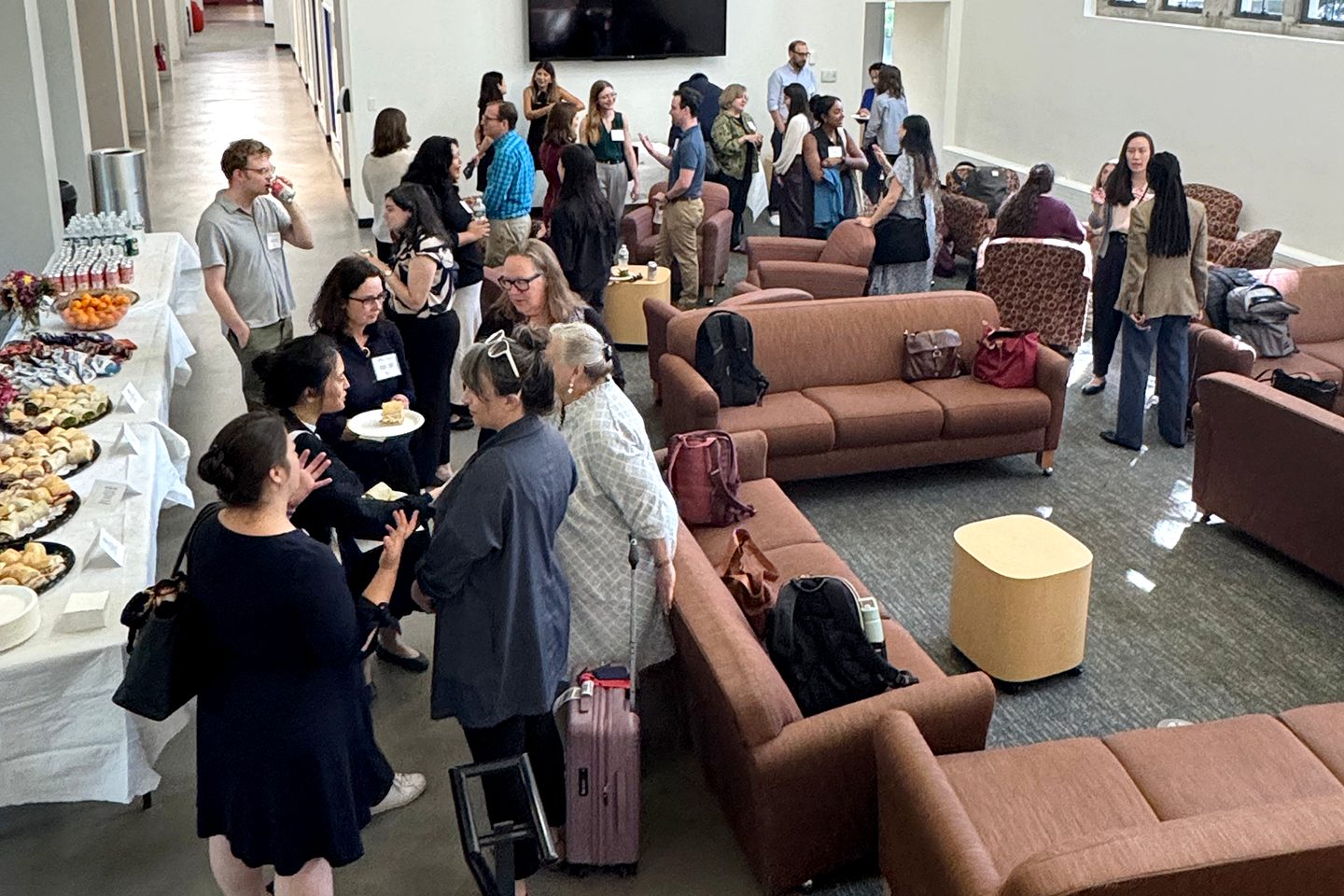
“All in all, it was a very hectic two-day period, but it was one of the best events we’ve ever had,” Weerapana said in an interview after the conference. “It showcased my two favorite things about Wellesley—the incredible accomplishments of our students in economics and the kind of careers they go on to, and then the bond that they have back with Wellesley.”
Betsey Stevenson ’93 and Diane Whitmore Schanzenbach ’95 delivered the keynote speeches. Schanzenbach, who is a professor at Georgetown University, the leading economic expert in anti-poverty programs, food insecurity, and education policy, and a self-described “policy nerd,” addressed the conference attendees on Saturday afternoon, speaking about the social safety net in the United States. Stevenson, who spoke on Friday evening, is one of the foremost labor economists in the United States and a professor at the University of Michigan; she was chief economist of the U.S. Department of Labor from 2010 to 2011, a member of President Obama’s Council of Economic Advisers, and a member of the Biden-Harris Treasury transition team. In her remarks, Stevenson discussed artificial intelligence and the labor market. She also spoke about her own career path, and how she came to realize at Wellesley that “economics was a toolkit that was going to help me understand the world, but deep in what I wanted to do was understand how we make the world better for people.”
During Weerapana’s remarks at the conference, he told attendees, “The hallmark of Wellesley students in my 27 years here has been their willingness to learn and to keep learning, and that was echoed in this conference today. … When [Wellesley alums] go out into the world, the world is going to change, the challenges are going to be different, but you have to trust you have the skills and connections and the knowledge and the desire to adapt, learn, and move on.”
“...economics was a toolkit that was going to help me understand the world, but deep in what I wanted to do was understand how we make the world better for people.”
Betsey Stevenson ’93, professor of economics at Gerald R. Ford School of Public Policy, University of Michigan
Camille Khong ’27 and Caitlin Donovan ’27 are two of the 14 senior thesis students who attended the conference, and the two days meeting and learning from Wellesley economics alums were meaningful to both of them.
“Being the first in my family to study economics and even consider a graduate degree, I don't know what academia looks like,” Khong said in an interview after the conference. “So being involved in the conference and seeing alums doing this critical research to inform policy or to inform different questions we have about the world, it was so amazing to just sit in the room and be a fly on the wall, not necessarily understanding the entire empirics of everything, but just listening and learning.”
Donovan said that she “learned a lot about how an economics degree can take you to a lot of different places.” She particularly enjoyed a careers panel that featured Emily Blanchard ’97 of Dartmouth Tuck School of Business, former Wellesley faculty member Kristin Butcher ’86 of the Federal Reserve Bank of Chicago, Lisa Gennetian ’90 of the Sanford School of Public Policy at Duke University, Elaine Liu ’03 of the Andrew Young School of Policy Studies at Georgia State University, and Dubravka Ritter ’06 of the Federal Reserve Bank of Philadelphia. Donovan said that the session taught her that your economics career doesn’t have to be linear. “That was really comforting to hear,” Donovan said.
Khong said that the biggest takeaway for her from the conference was, “I can do this.” Listening to and talking with all of the alums, especially Karen Ni ’18, who is an associate at Cornerstone Research, Khong said she realized that a career in economics is something she, too, can pursue. She learned that people who study economics are not just “people who have this clean-cut image, who have extensive experience starting from when they were 18. It’s people who found their path along the way and understood that there are a lot of challenges… [the conference] gave me a really rich understanding that you don't have to have all the answers, you don’t have to know everything, you just have to believe that you want to do it and have the drive and motivation to. And so it really inspired me to continue doing the hard things that [are] related to economics research.”
The economics department intends to hold the conference every five years. After the inaugural conference, Weerapana said, it was obvious that this event would be the beginning of a lasting tradition based on the exchange of knowledge and a dedication to making the world a better place.
—
E.B. Bartels ’10 and Lisa Scanlon Mogolov ’99 assisted with reporting for this story.