South Asia Studies
Academic Program Introduction
Our program focuses on the histories, cultures, and people of South Asia and its diaspora. Students explore both European and South Asian theories of knowledge. Majors concentrate on a single method, such as literary analysis, or a single theme, such as international development, and become proficient in a South Asian language such as Hindi or Urdu.
Learning goals
- Think in a multicontextual way and at the intersection of disciplines.
Engage in rigorous encounters with a crucial but underrepresented area of the world.
Gain a broad understanding of the cultures, histories, religions, societies, politics, and people of the region and in the diaspora.
Learn to speak and comprehend, and to write and read, in Hindi or in Urdu, or in another South Asian language.
Programs of Study
South Asia studies major and minor
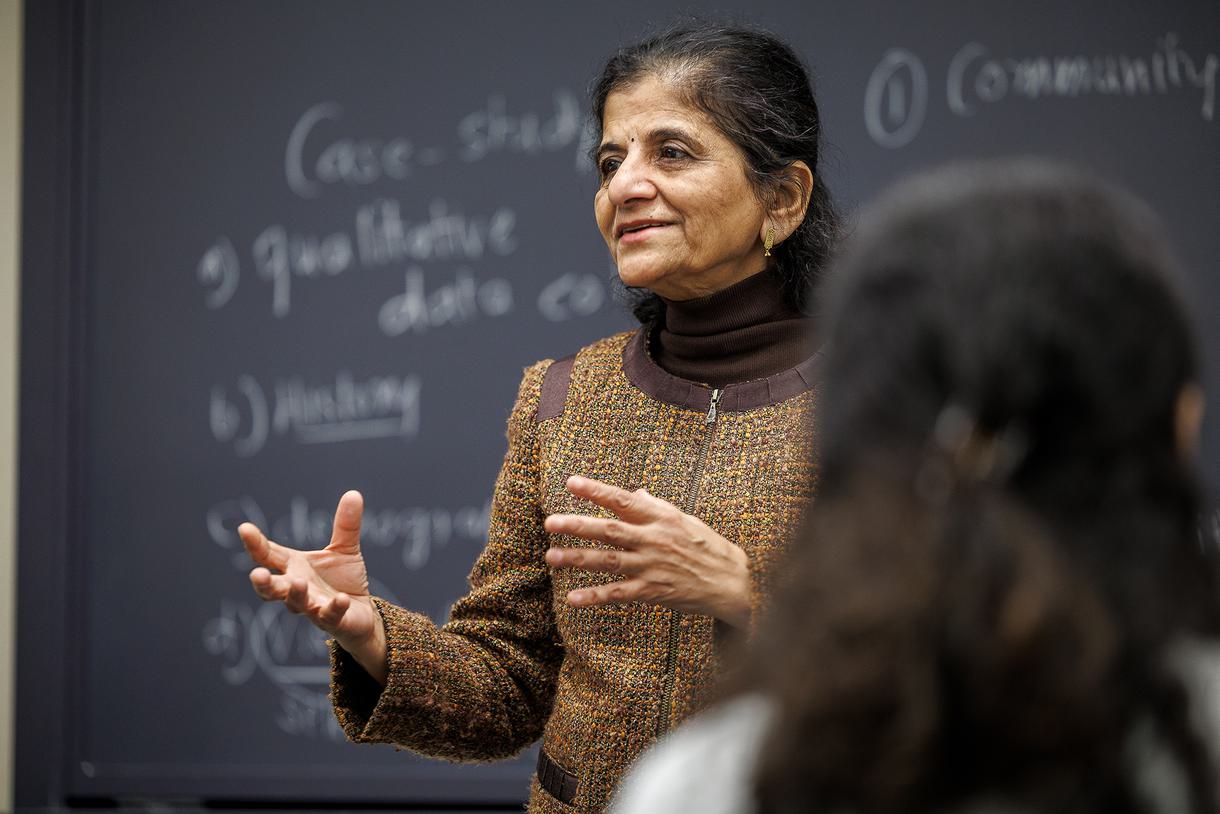
Students acquire skills and sentiments needed to understand South Asian arts, cultures, histories, politics, and religions.







Course highlights
Intermediate Hindi/Urdu I
HNUR201
Intermediate Hindi/Urdu will build on the reading, writing, and speaking skills acquired in Elementary Hindi/Urdu (HNUR 101-HNUR 102). The readings, drawn from simple literary texts as well as from social and journalistic writings, will reinforce the grammar learned in the introductory course and introduce new grammar topics. The writing exercises, mainly in essay formats, will stress usage of idioms and sentence constructions by students. The class will be conducted in Hindi/Urdu with a part of every class dedicated to conversation on the theme of the day in the language.
-
South Asian Diasporas
SOC232
If any mention of South Asian culture conjures for you Bollywood films, Bharatanatyam dancers, and Google engineers, then this course will prompt you to reconsider. Adopting a sociological perspective that examines culture from the specific context of migration, we will study the histories of Punjabi-Mexican families in California, Gujarati motel owners across the United States, South African Indians at the end of apartheid, and Bangladeshi garment workers in London’s East End, among others. Through our study, we develop a nuanced understanding of race, culture, migration, and upward mobility in the United States and beyond, while also considering the power of mobile South Asian cultures, including movies, music, dance, and religion. (SAS 232 and SOC 232 are cross-listed courses.) -
Worlds of South Asia
SAS120
This introductory course provides students the opportunity to learn about the South Asian Subcontinent, which presently includes the countries of Afghanistan, Bangladesh, Bhutan, India, Nepal, the Maldives, Pakistan, and Sri Lanka. Students will come to understand the physical, human, and spiritual geography of South Asia, to learn about the most significant cultural trends and historical developments of the Subcontinent, to understand the lineages of South Asian languages, to know the core beliefs of Hinduism, Buddhism, Islam, and Christianity and their political influence in South Asia, to understand state formation and economic development patterns in South Asia, to appreciate contemporary arts and culture, and to understand the current politics of the region.
Research highlights
-
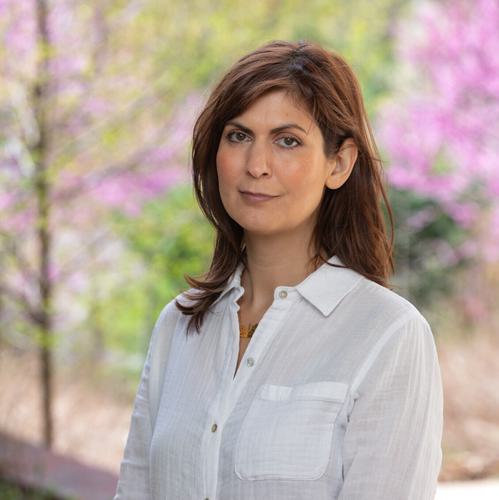
Professor Neelima Shukla-Bhatt’s book Hinduism: The Basics (Routledge, 2023) digs into the variety of philosophical schools, priestly rituals, and popular practices common in the Hindu faith, looking in particular at the diversity of Hinduism’s traditions and how they function in everyday life.
-
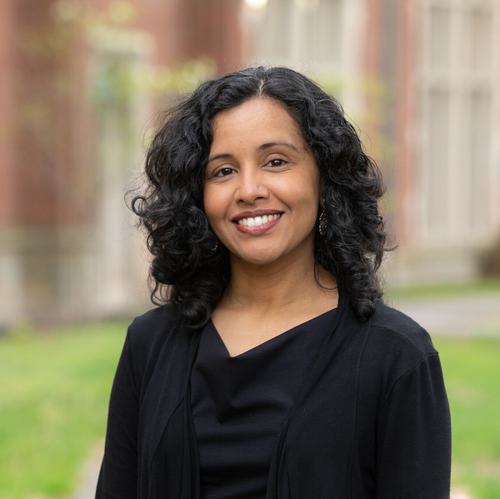
The Islamic Welfare State: Muslim Charity, Human Security, and Government Legitimacy in Pakistan (Cambridge University Press, 2023), by Professor Christopher Candland, explores the relationship between government legitimacy, everyday security, and lived Islam in Pakistan, a Muslim-majority country.
Opportunities
-
Student organizations
Students run three organizations centered on South Asian communities: Al-Muslimat, Wellesley’s Muslim Student Association; Darshana, for Wellesley’s Hindu community; and the Wellesley Association for South Asian Cultures, which hosts a cultural show, Shruti Laya, each fall.
Beyond Wellesley

Beyond Wellesley
Our graduates pursue a wide range of careers in health care, consulting, government, and advocacy. Recent employers include ATASK (Asian Task Force Against Domestic Violence), Druk Holding and Investments, the National Institutes of Health, Publicis Sapient, the National Cancer Institute, Singapore’s Ministry of National Development, and the World Bank.
Recent Employers


106 Central Street
Wellesley, MA 02481