
When Cecilia Rao ’25 heard that Wellesley offered a class on Bad Bunny, she knew she had to take it. Like the artist himself, Rao is from Puerto Rico, and she has loved his music since his early days; she enrolled in AMST 323: Bad Bunny: Race, Gender, and Empire in Reggaetón in the fall of her junior year. Designed and taught by Class of 1966 Associate Professor of American Studies Petra Rivera-Rideau, the course was the first of its kind in the United States.
“The Bad Bunny class was so freaking amazing,” says Rao, who grew up in San Juan. “I remember thinking, oh my god, I’ve learned more about Puerto Rican history in this class than I ever did in high school. And I had a whole class dedicated to Puerto Rican history!”
Rao says Rivera-Rideau was one of the best professors she had while at Wellesley, so when she heard about an opening to be one of her research assistants she applied right away. The double major in peace and justice studies and education studies did not get the position the first time around, but Rivera-Rideau encouraged her to try again senior year, and she got the job.
“I saw these research assistantships as not only a beneficial thing for me to have help, but also as an opportunity for students to receive mentorship around academic research,” says Rivera-Rideau
Rivera-Rideau’s research focuses on race, ethnic identity, and popular culture. Building off of her first book about reggaetón, Remixing Reggaetón: The Cultural Politics of Race in Puerto Rico, she developed the Bad Bunny course at Wellesley, which she first taught in spring 2022. It evolved into the Bad Bunny Syllabus, a public resource available for teaching, research, and educational purposes. She and syllabus co-creator Vanessa Díaz, a professor at Loyola Marymount University, then co-wrote the book P FKN R: How Bad Bunny Became the Global Voice of Puerto Rican Resistance.
Rivera-Rideau and Díaz hired student research assistants from Wellesley and Loyola Marymount to help them with both the Bad Bunny syllabus and the book. Rao and four other Wellesley students worked on P FKN R: Thandiwe Birchwood ’26, Daniela Finlay ’23, Yahanna Streeter ’28, and Anna Vorhaben ’25. All were recruited through the Bad Bunny class, the Transforming Stories, Spaces, Lives Mellon Foundation Humanities for All Times Grant, or the Knapp Social Science Center research programs.
“So not only has Petra helped me tremendously in terms of learning to do research and writing these long papers, but my outlook on everything now is: How do we go deeper?”
Cecilia Rao ’25
One of their main responsibilities was to translate Bad Bunny’s lyrics from Spanish into English, which Rao said was extremely challenging. She spent hours trying to get the exact right nuance of Puerto Rican regionalisms: “You’d think that being bilingual and being from Puerto Rico, it wouldn’t be that hard, but honestly, because of all the slang, you want to make sure that everything is being translated correctly.”
Students don’t have to be native Spanish speakers to work with Rivera-Rideau and Díaz. Vorhaben, a Latin American studies major, is an intermediate/advanced Spanish speaker who is passionate about Spanish-language acquisition, as well as researching the histories and intricacies of the Caribbean. While at Wellesley, she took almost every class offered by Rivera-Rideau, who was also her advisor for her thesis on Puerto Rican rapper and singer-songwriter Young Miko.
Rao and Vorhaben also transcribed interviews, which Vorhaben says was sometimes difficult as Zoom has a lot of trouble transcribing bilingual conversations. Despite the challenges, Vorhaben says she loved the process. Rao found it especially exciting to get to listen in on the conversations Rivera-Rideau and Díaz had with some big names in the music scene, such as Bad Bunny’s producer Marco Daniel Borrero, known professionally as MAG.
Vorhaben appreciates that Rivera-Rideau and Díaz fostered a collaborative environment. “So much of academia is so isolated and very independent, and people are so defensive and protective about their ideas. And I really, really admire both professors for being like, ‘No, this is going to be a community effort,’” she says. “I still felt very valued in that process, which also gives you the confidence to go on and write a thesis or, you know, get a job in academia. Their work ethic and the way that they engaged with us was really awesome.”
Vorhaben now works at a bilingual preschool, and Rao will enroll at the University of Puerto Rico School of Law in August. Both continue to use skills they acquired as Rivera-Rideau and Díaz’s research assistants. Vorhaben speaks Spanish every day with her students, and Rao feels ready to tackle law school. (And they have continued to follow Bad Bunny’s work—Rao attended three of his San Juan residency concerts.)
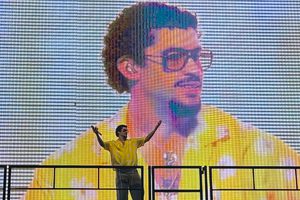
“It took a lot of time for people to take Bad Bunny seriously,” says Rao. People thought he was “just this reggaetón artist singing about women and sex and parties, but once you get past that first layer, like Petra has been trying to do for so long with her class and her book, you can see how it’s about race, how it’s about gender,” she says. “So not only has Petra helped me tremendously in terms of learning to do research and writing these long papers, but my outlook on everything now is: How do we go deeper?”
Rao is considering pursuing areas of law that could benefit her island, like environmental law so that she can fight the privatization of public beaches. She has also thought about becoming a public defender, because the intersection of race, gender, class, and the federal court system is, as she puts it, “freaking crazy.” In Puerto Rico, the federal court operates in English because the island is a United States territory, and yet, “every single person that was in a hearing [I attended] needed to have translating headphones,” says Rao. In short, Rao says, like Bad Bunny, “I just want to be able to help the people of Puerto Rico.”
The former student research assistants say it has been awesome to see P FKN R out in the world. Rao attended Rivera-Rideau and Díaz’s book signing at the University of Puerto Rico.
“Seeing the book come to fruition and get all of these accolades and crazy impressive awards is just so wonderful,” Vorhaben says. “They’re my mentors, but I’m so proud of them. … They’re geniuses, and they’re my idols. They’re just so cool.”