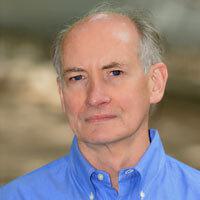
Guy Rogers
Professor of History and Classical Studies
Classicist and historian of Greek and Roman history, ancient religion and warfare, Alexander the Great, and Jewish History.
Guy MacLean Rogers holds a Magna cum Laude B.A. degree with subject honors in Classics and Political Science from the University of Pennsylvania, where he played Division I soccer alongside legendary New York Cosmos star Santiago Formoso and was awarded a Thouron Fellowship. In 1979 he earned the fourth first-class honors B.A. degree in Ancient History from University College London, where he studied with Sir Fergus Millar, John North, Tim Cornell, Margaret Drower, and Amélie Kuhrt, and won a Full Colors Award for football. He received a Ph.D. in Classics from Princeton University in 1986. He has been the recipient of numerous grants and awards for his research and writing, including ones from the National Endowment for the Humanities, the Fulbright Fellowship program (Turkey, Israel, Austria), and the American Philosophical Society. In 1996-97 he held a senior visiting fellowship at All Souls College Oxford. In 2003 he was the recipient of the “Perennial Wisdom Medal” from the Monuments Conservancy in New York City for his contributions to the study of humanities.
Professor Rogers’ first book, The Sacred Identity of Ephesos: Foundation Myths of a Roman City, won the 1989 Routledge Ancient History Prize. In 2014 The Sacred Identity of Ephesos was reprinted in the Routledge Revival Program of distinguished scholarly works from the past 100 years. In 2004 his biography, Alexander: The Ambiguity of Greatness was published by Random House, now reprinted by Penguin. It was selected as a History Book club featured alternate and has been translated into Russian and Greek. His textbook, Roots of the Western Tradition: A Short History of the Ancient World, is in its eighth edition. The first Mandarin edition was published by Brilliant Publications of Shanghai in 2013. He has been a member of the editorial advisory board of the Italian classical journal Mediterraneo Antico since its inception. In 1996 he and his Wellesley colleague Mary Lefkowitz edited Black Athena Revisited, a volume of scholarly responses to the theories of Martin Bernal about the origins of Greek civilization. From 2002 to 2006 he served as the co-editor of Rome, The Greek World, and the East, the three volumes of collected essays of the late Oxford historian Sir Fergus Millar. In 2013 Yale University Press published his book, The Mysteries of Artemis of Ephesos: Cult, Polis, and Change in the Graeco-Roman World as the first title in its Synkrisis series. His latest book, For the Freedom of Zion: The Great Revolt of Jews against Romans, 66-74 CE, was published by Yale University Press in 2022 and was selected by Choice as an Outstanding Academic Titles of 2022.
He has contributed regularly to television programs, documentaries, and podcasts about the ancient world for the History Channel and the BBC, and his op-ed pieces and reviews have appeared in U.S. national and international newspapers and news websites, including the Los Angeles Times, the Middle East Eye in London, and the Israel Journal of Foreign Affairs. During his 40 year teaching career at Wellesley College he also published more than 40 scholarly articles and reviews, including most recently the commissioned essay "Sicarii and Zealots" in the Oxford Research Encyclopedia of Classics (16 July 2026).
Professor Rogers was Chairman of the History Department of Wellesley College from 1997 to 2001 and 2012. From 1999 to 2002 he served as Wellesley College’s first Faculty Director of Internships and Service Learning. He wrote the proposals adopted by Wellesley College for its inaugural Summer School and the Newhouse Humanities Center. He was appointed to the Macricostas Chair of Hellenic and Modern Greek Studies at Western Connecticut State University from 2006-08, the first endowed chair within the Connecticut state system. From 2008-13 he held the Mildred Lane Kemper endowed Chair at Wellesley College. From 2013-18 he served on the Advisory Board of the Madeleine Korbel Albright Institute for Global Affairs and from 2013-18 was an affiliated faculty and advisory board member of the Freedom Project at Wellesley College. In 2014 he was elected to the William R. Kenan Jr. endowed Professorship of Classics and History at Wellesley College. He teaches courses on Greek and Roman history, ancient religion and warfare, Alexander the Great, Iulius Caesar, and the Near Eastern Roots of Graeco-Roman civilization.
The Global Education Network in New York City selected Professor Rogers’ course on Alexander as its first online course. In the spring of 2014 he taught the MOOC (Massive Open Online Course), “Was Alexander Great? The Life, Leadership, and Legacies of History’s Greatest Warrior” for The Harvard/MIT EdX consortium to 17,500 students worldwide. A blog about the course “Was Alexander Great?” appeared in Inside Higher Education. In 2016 “Was Alexander Great?” was leased to Xuetang University, China’s premier MOOC provider. From 2019 to 2024 Professor Rogers was a visiting research professor of Torhea/Neoscholar Education China International Summer School at Jiao Tong University in Shanghai.
His interests include baroque and classical music, painting, oenology, animal welfare, restoring Federal colonial houses, and travel. He lives in Litchfield County, Connecticut and New York City.
COURSES
HIST200 Roots of the Western Tradition
HIST228 Swords and Scandals: Ancient History in Films, Documentaries, and Online
HIST229 Alexander the Great: Psycopath or Philosopher King
HIST230 Greek History from the Bronze Age to the Death of Philip II of Macedon
HIST231 History of Rome
HIST325 "Veni' Vidi; Vici": The Life and Times of C. Iulius Caesar
Education
- B.A., University of Pennsylvania
- B.A., University College London
- M.A., Princeton University
- Ph.D., Princeton University
Current and upcoming courses
Alexander the Great: Psychopath or Philosopher King
HIST229
Alexander the Great murdered the man who saved his life, married a Bactrian princess, and dressed like Dionysus. He also conquered the known world by the age of 33, fused the Eastern and Western populations of his empire, and became a god. This course will examine the personality, career, and achievements of the greatest warrior in history.
-
Alexander the Great: Psychopath or Philosopher King
HIST329
Alexander the Great murdered the man who saved his life, married a Bactrian princess, and dressed like Dionysus. He also conquered the known world by the age of 33, fused the Eastern and Western populations of his empire, and became a god. This course will examine the personality, career, and achievements of the greatest warrior in history against the background of the Hellenistic world. -
Swords and Scandals: Ancient History in Films, Documentaries, and Online
HIST228
Films such as Gladiator, The Passion of the Christ, and 300, documentaries such as The Last Stand of the 300, and Internet courses such as Alexander Online perhaps influence how the majority of people now understand antiquity. But are these visual media historically reliable representations of the past? Or do they rather primarily reflect changing artistic and societal concerns? How have the use of digital backlots, blue screens, and other technical innovations affected how the past is being represented and understood? In this course we will examine the representation of the ancient world in films, documentaries, and online media from the "Sword and Sandal" classics of the past such as Ben-Hur to the present, within the scholarly frameworks of ancient history and modern historiography.