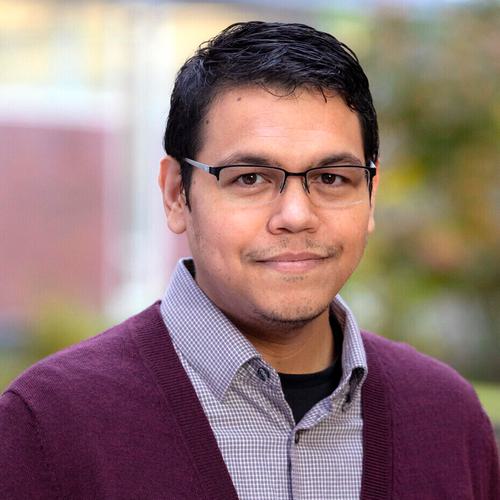
Nicholaus Gutierrez
Assistant Professor of Cinema & Media Studies
Media History and Theory, Cinema History and Theory, Digital Technology, Visual Culture, Virtual Reality (VR), Technological Subjectivity.
Broadly, my research focuses on the history and theory of media technologies, with a particular interest in digital media and computing history. My interest in digital media stems from the ways in which they incorporate pre-existing media like photography, cinema, and television to produce new social and political configurations. I am currently working on a book project focusing on the cultural and development history of VR technology, which has inspired a series of questions in popular culture about what it means to be an embodied subject in a digital age.
My courses touch on themes of social control and ideology, racial and gender bias in digital media design (the interface, human-computer interaction, algorithms), contemporary theories of subjectivity, and embodiment with and through media. I am especially interested in exploring histories of computing that challenge the dominant Silicon Valley narratives of singular genius inventors and “disruption.” In all my courses, I emphasize the historical intersections and disjunctions that exist between newer media and more established media, from the camera obscura and telegraphy to video games and VR.
Education
- B.A., College of William and Mary
- M.A., New York University
- Ph.D., University of California-Berkeley
Current and upcoming courses
Social Histories of Computing: from Cybernetics to Social Media
CAMS210
The standard narrative of digital technologies is that they change the world for the better: they facilitate access to information and create new efficiencies in labor and entertainment. But does this story accurately reflect the impact of technology on global society? In this course, we will undertake a critical investigation of the seminal moments and objects in the history of computing, from cybernetics to social media. Along the way, we will work to focus on perspectives that have too often remained invisible in this history, for instance the gendered role of labor in computer programming and production and the prevalence of social bias in the design and function of technologies like Artificial Intelligence (AI).
-
Technologies of Cinema and Media
CAMS201
This course investigates the technological, economic, and cultural determinants behind forms of media from the last 150 years, including the telephone, the telegraph, photography, and film, as well as new media like virtual reality and interactive media. If photography realized the desire to transcend mortality and early cinema fulfilled the dream to depict the world, their missions have been extended by technologies that seek to invent new worlds as well as material and virtual realities. Relying on a material theory of film and audio-visual media, the course examines both technologies of making and of circulation, exploring the commercial potential of the entertainment industry. The course will employ relevant texts, films, and other audio-visual artifacts.