Neuroscience
Academic Department Introduction
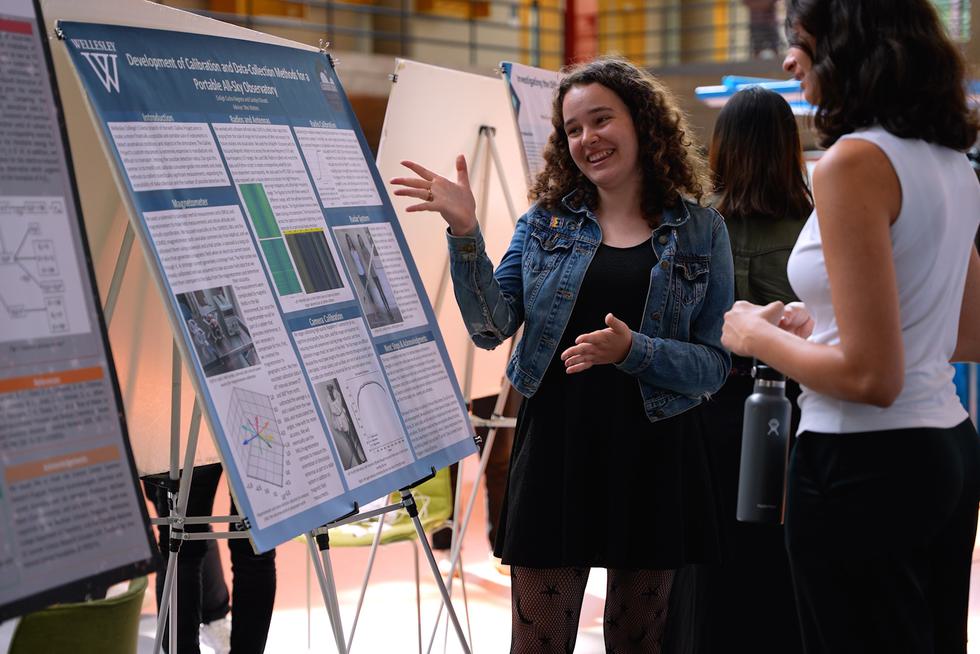
Neuroscience explores how the brain and nervous system develop and function to generate our conscious experience and guide our behavior. The scope of neuroscience ranges from molecules within individual nerve cells to neural systems that span the brain and body. A student who likes biology, psychology, chemistry, or physics can study and apply all of these in neuroscience. Mathematical and computer models also offer increasingly useful insights into brain function. Our students regularly present at national meetings, including the Society for Neuroscience meeting.
Learning goals
- Develop a “STEM identity”—that is, identify as a scientist.
- Describe and apply major neuroscientific experimental methods and approaches.
- Demonstrate the ability to interpret and critically evaluate the neuroscience literature.
- Use the scientific method to design original experiments that advance current knowledge, while adhering to ethical standards.
- Develop confidence and demonstrate fluency with oral and written communication for scientific and general audiences.
- Explain the societal relevance of discoveries in neuroscience and their translational potential for improving human health and well-being.
Programs of Study

Neuroscience major
Students will take courses in three broad subfields of neuroscience: cellular and molecular neuroscience, cognitive neuroscience, and systems and computational neuroscience.






Course highlights
Intermediate Neuroscience I with Lab
NEUR201
This course delves deeper into key concepts in neuroscience that were introduced in NEUR 101, including neural circuits and brain disorders. The course will also introduce additional topics, such as computational approaches and sensory systems. In the associated laboratory students will learn neuroanatomy and histological techniques, as well as practice modeling neurons computationally and scientific communication.
-
Neuropharmacology
NEUR332
Neuropharmacology is the study of how drugs act on the nervous system. In this course, you will learn the molecular mechanisms of drug action, increase your depth of knowledge of the various neurotransmitter systems, and apply this knowledge to understand how drugs are used to treat disorders of the nervous system including pain, sleep disorders, affective disorders, addiction, schizophrenia, neurodegeneration, seizures, and stroke. You will have the opportunity to discuss primary literature, lead class discussions, and investigate the properties of drugs that appear in the popular press. Through these experiences you will improve your reading, critical thinking, writing, and oral presentation skills. -
The Emotional Brain
NEUR107X
This course provides an introduction to the neuroscience of emotions. We will explore the brain structures, neural circuits, and physiological processes that underlie emotions and subsequent behaviors. Topics include but are not limited to the role of the different brain regions, neurotransmitters, neuroimaging techniques, emotional regulation, the impact of emotions on cognition and behavior and the role of emotions in the development of AI.. This course does not count towards the Neuroscience major.
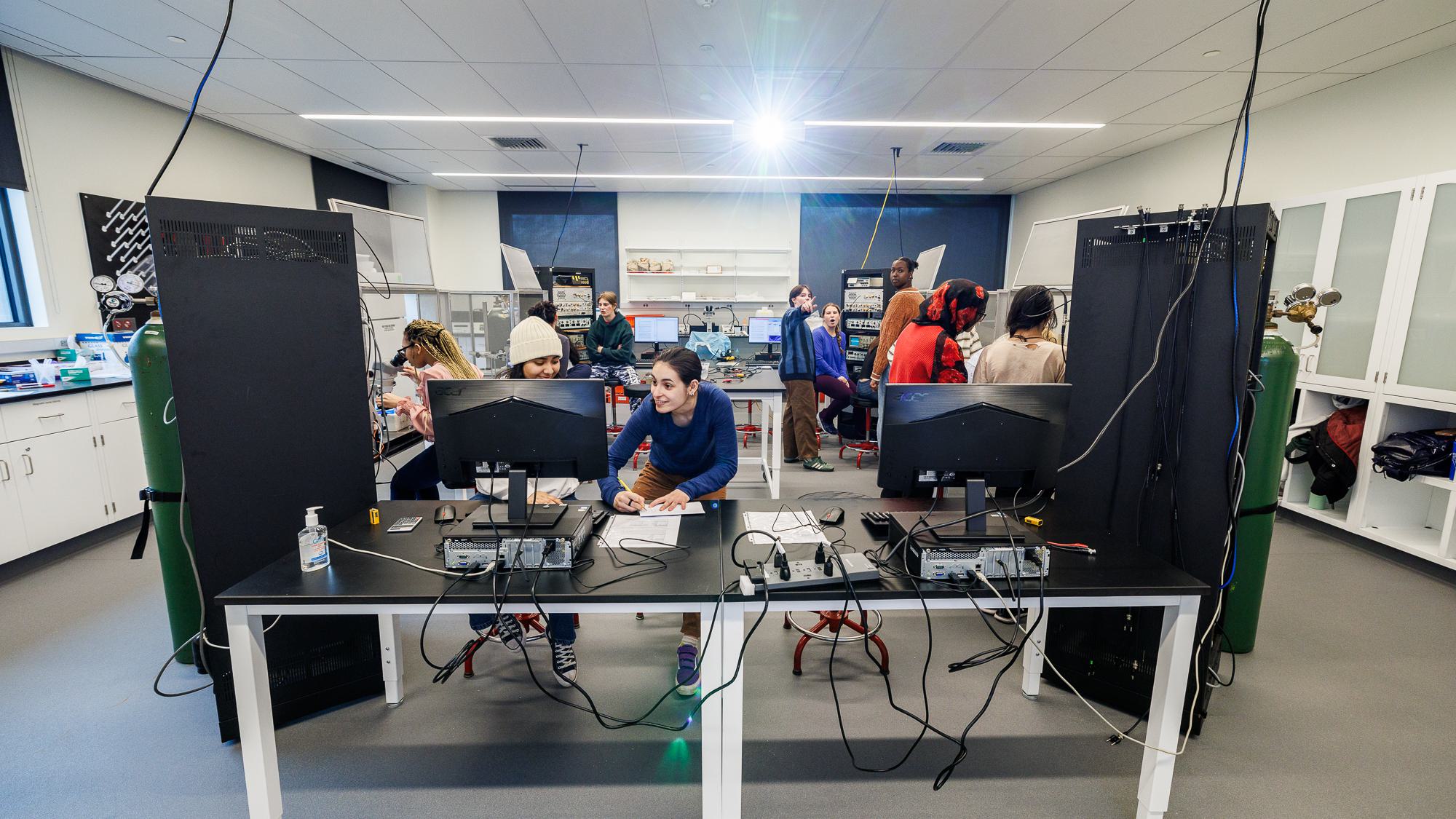
Places and spaces Electrophysiology Lab
In this lab, students in neuroscience and biological sciences learn about the electrical properties of cells, tissues, and brain and heart activity.
Research highlights
Neuroscience majors work with our world-class faculty and participate in substantive projects using cutting-edge equipment.
-

In the lab of Professor Sharon Gobes, students investigate the cognitive and neural mechanisms underlying animal behavior, using songbirds as a model system to study learning and memory.
-

Professor Courtney Marshall’s lab investigates how pathological proteins aggregate, spread, and impair cognitive function in people with Alzheimer’s disease.
-

Professor Marc Tetel’s lab is studying the effects of diet, activity, sleep, and stress on the human gut and vaginal microbiomes.
-

Professor Sara Wasserman’s lab is examining how the brain incorporates different internal and external environments to generate contextually appropriate behavior.
-

In Professor Mike Wiest’s behavioral neurophysiology lab, students record neural activity from behaving rats to characterize neural substrates of attention and perception.
Opportunities & Community
Dedicated to equity, engagement, and belonging, we offer concrete opportunities for all students to join us as valued and respected members of our department. Students have many options to enhance and tailor their academic experience to their unique interests and career goals.
-
Seminars and panels
Prominent neuroscientists regularly speak at Wellesley about their research and work. We benefit from our proximity to Boston’s hospitals, research centers, and biopharmaceutical companies. Participants from Wellesley and beyond discuss and debate vital issues for neuroscientists in academic and non-academic contexts. Recent talks have included “LGBTQ+ in Science” and “Diversity, Equity, and Inclusion in Neuroscience.”
-
Neuroscience Club
The Neuroscience Club is a welcoming community and support network for neuroscience majors, and a forum for all Wellesley students and faculty to learn about neuroscience.
-
Research
We offer excellent research opportunities for students. Whether they are first-years new to lab work or seniors working on a thesis, students collaborate with neuroscience faculty on research projects in our labs. Research students can volunteer, get credit, or apply for a limited number of paid positions for work-study eligible students. In addition, our faculty mentor students in the Summer Research Program and advise students pursuing off-campus research opportunities.
-
Fellowships
Two fellowships support students engaged in research in Francisco Quintana’s lab at the Center for Neurologic Diseases at Brigham and Women’s Hospital, and in leukodystrophy research in the Division of Neurology at the Children’s Hospital of Philadelphia.
Beyond Wellesley
Beyond Wellesley
Most of our majors proceed to medical school or attend top-ranked graduate neuroscience, cognitive science, or psychology PhD programs. Other graduates work in industries that intersect with neuroscience, such as public health, patent law, or education.
Recent Employers





106 Central Street
Wellesley, MA 02481