History
Academic Department Introduction
Courses in the History Department cover almost every region and era of the human past. Students learn to think in broadly humanistic ways about subjects such as government, war, culture, race, and economics. In gaining historical knowledge, students understand societal developments and contradictions as part of long processes with deep-rooted origins. Our faculty study and teach a wide range of subjects. What unites our work is a rigorous shared methodology. We closely analyze primary sources, engage in dialogue with existing scholarship, and share our findings and ideas in a variety of media, including scholarly journals, academic conference papers, public lectures, and podcasts.
Learning goals
- Understand the process of change over time.
- Demonstrate familiarity with the histories of a range of cultures and chronological periods.
- Gain specialized knowledge about selected regions or about problems that span various cultures and times.
Programs of study

History major and minor
Students recognize the relationship between past and present, especially the differences.
International relations – history major
This interdisciplinary field examines global interactions, past and present. Students are exposed to a wide range of viewpoints and methodologies in their study of fields such as foreign policy, war, security, international political economy, development, and human rights.











Course highlights
China and America: Evolution of a Troubled Relationship
HIST277
A survey of China's economic, cultural, and political interactions with the United States from 1784 to present with a focus on developments since 1940. Principal themes include: post-imperial China's pursuit of wealth and power, changing international conditions, military strategy, the influence of domestic politics and ideology, and the basic misunderstandings and prejudices that have long plagued this critical relationship. Topics include: trade throughout the centuries; American treatment of Chinese immigrants; World War II and the Chinese Revolution; the Cold War; Taiwan; and the ongoing instability of relations since 1979. Sources include the ever-increasing number of declassified U.S. documents as well as critical materials translated from the Chinese.
-
Dictatorship, Authoritarianism and Transition to Democracy in Spain and Latin America
HIST218
In the twentieth century, democracies in Spain and Latin America fell under the authoritarian boot of dictatorial rule. In the 1930s a democratic republican government in Spain led to a devastating civil war and to the long dictatorship of Francisco Franco (1939-1975). In Latin America, strong democracies fell to authoritarian rule in Brazil (1964-1985), Chile (1973-1989), and Argentina (1976-1980). By examining the social, political and cultural conditions that led to these dictatorial regimes, this course considers how political ideologies, parties and their agendas aided their rise; the role of Catholicism, the Catholic Church, foreign intervention, and social movements in their rise, consolidation, ultimate end, and resistance to such regimes; the challenges and conditions of their post-dictatorial transitions back to democracy and the lessons for democratic rule more generally. -
Seminar: A New Birth of Freedom: Reimagining American History from Revolution to Civil War
HIST311
In the years between the Revolution and the Civil War the United States experienced dramatic change: rapid geographic expansion, the growth and transformation of the market economy, the extension and evolution of slavery and the movement for abolition, and a Civil War that nearly destroyed the nation. These topics and others are long familiar to students of US history, but we will re-frame our analysis of this period: examining expansion by re-centering Native Americans and competing imperial powers, considering the rise of the state within the broader framework of world history, and re-imagining slavery in the context of global capitalism. In considering these topics and others from a variety of perspectives, we will explore the continued significance of the early national era in American History.
Research highlights
-

Professor Guy M. Rogers’ book For the Freedom of Zion: The Great Revolt of Jews against Romans, 66–74 CE (Yale University Press, 2022) was named an outstanding academic title in 2022 by Choice.
-
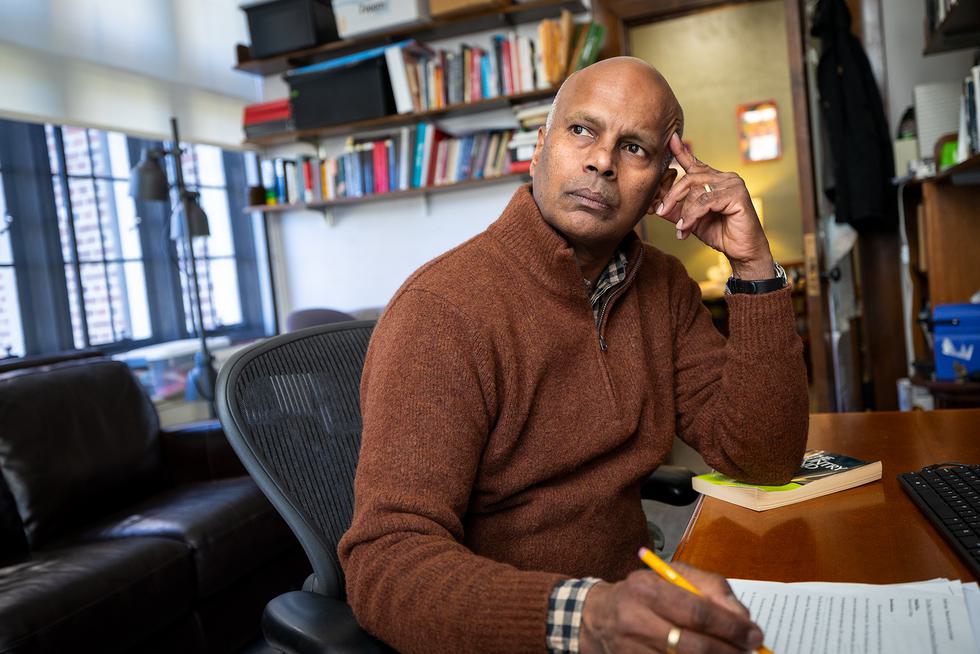
In 2023, Professor Nikhil Rao was on sabbatical in Mumbai, India, as a senior research fellow of the American Institute of Indian Studies. He was researching his new book project, which focuses on the enterprise of cooperative housing in post-independence Bombay and the implications of this enterprise for notions of property and urban citizenship.
-

Professor Katherine Grandjean recently finished writing her second book, Kingdom of Devils: A Tale of Murder in the Shadow of the American Revolution. The book investigates a long-forgotten series of murders in Appalachia in the 1790s (Random House, June 2026).
Beyond Wellesley
Beyond Wellesley
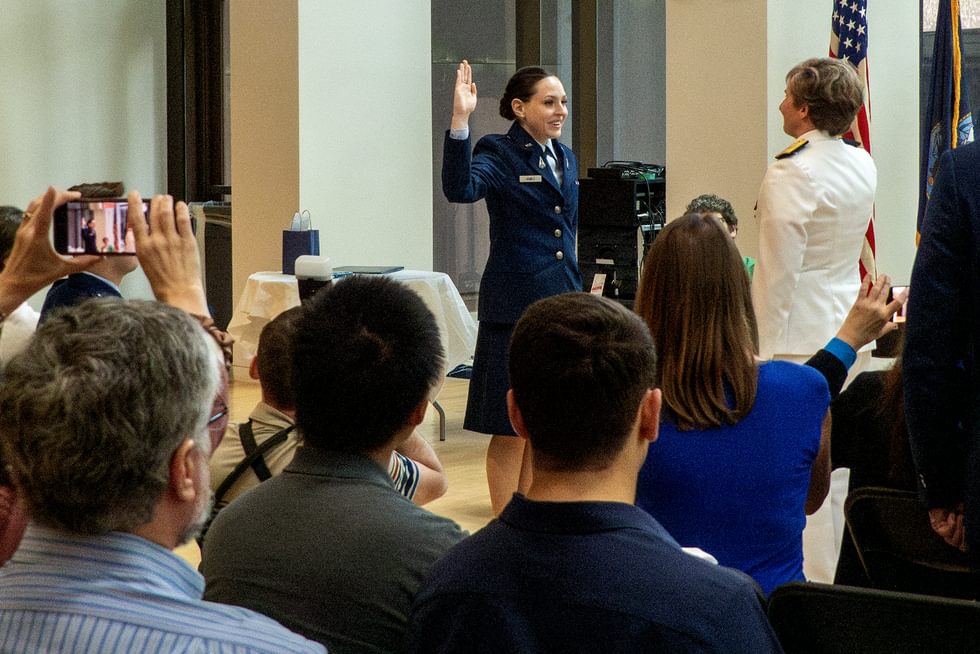
The study of history provides excellent preparation for a wide range of careers. Many of our graduates work in journalism, publishing, law, business, finance, and education.
Recent Employers



For more
Our newsletter
Published each May, the History Department’s annual newsletter describes the past year’s new courses, department events, and news about faculty, students, and alumnae.
106 Central Street
Wellesley, MA 02481