Chemistry
Academic Department Introduction
Who can take a chemistry course or become a chemistry major or minor? We welcome everyone! Students from all levels of preparation collaborate to understand molecules and reactions, and get hands-on experience solving real-world problems in the lab. Chemistry is involved in everything you see. At the core of alternative energy sources, green material, and new drugs for emerging diseases, chemistry offers solutions to major environmental, social, and political challenges.
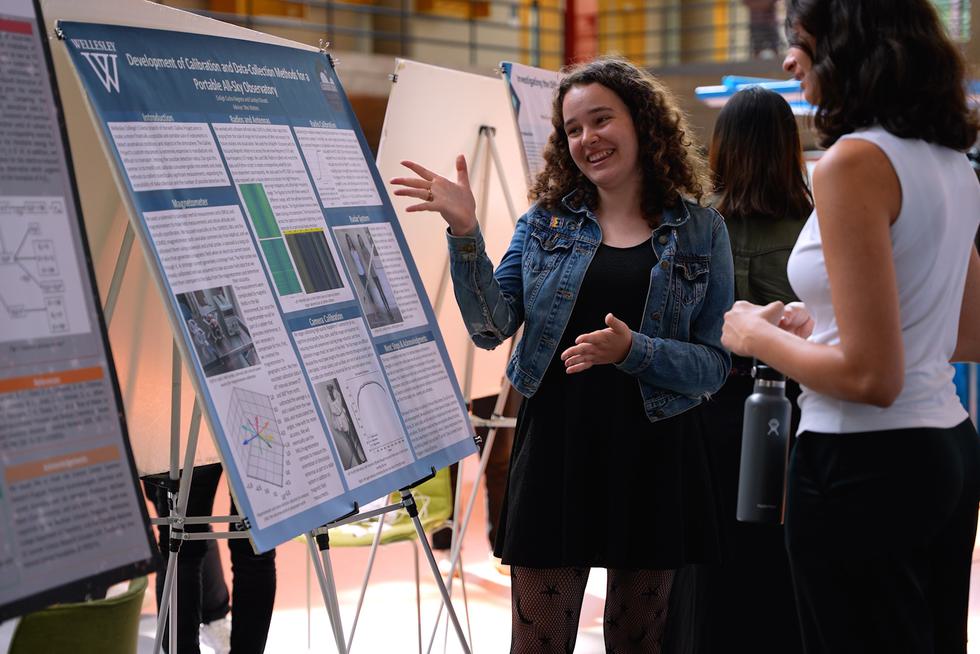
Research plays a vital role in the chemistry major, with all students involved in some form of research outside of the classroom. Projects can involve synthesizing new molecules, designing novel drug candidates, developing pedagogy on inclusion and equity in STEM, and more. Many students find independent research to be one of the most fulfilling parts of their undergraduate years. Through publications and presentations, student research has an impact on the progress of science beyond Wellesley.
Learning goals
- Predict and explain the properties and reactions of atoms, molecules, and materials.
- Collaboratively develop, execute, and interpret novel experiments using modern instrumentation and computational methods.
- Communicate complex chemical ideas to specialist and general audiences.
- Appreciate the impact of chemistry in contributing to and addressing societal problems.
Programs of Study

Chemistry major and minor
Students practice connecting chemical principles to contemporary issues.




















Course highlights
Organic Chemistry I with Laboratory
CHEM211
Topics covered include: stereochemistry, synthesis and reactions of alkanes, alkenes, alkynes, alkyl halides, alcohols and ethers, nomenclature of organic functional groups, polarimetry, IR, C-NMR, and GC/MS.
This course has a required co-requisite laboratory - CHEM 211L.
Places and spaces
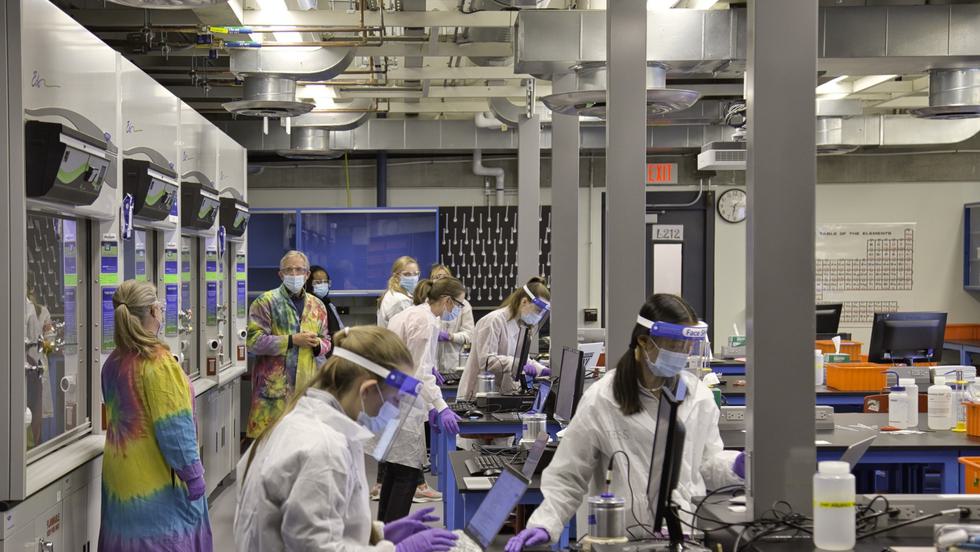
Labs and classrooms are housed in our state-of-the-art Science Complex. We have a broad and deep set of instrumentation that is shared within the chemistry community and among departments. Throughout their classes and research, students use these instruments—many of which are typically not accessible until graduate-level study.
Instrumentation includes:
- 500 MHz NMR
- X-ray powder diffractometer
- Isothermal titration calorimeter
- Flash photolysis spectrometer
- Atomic Force Microscope
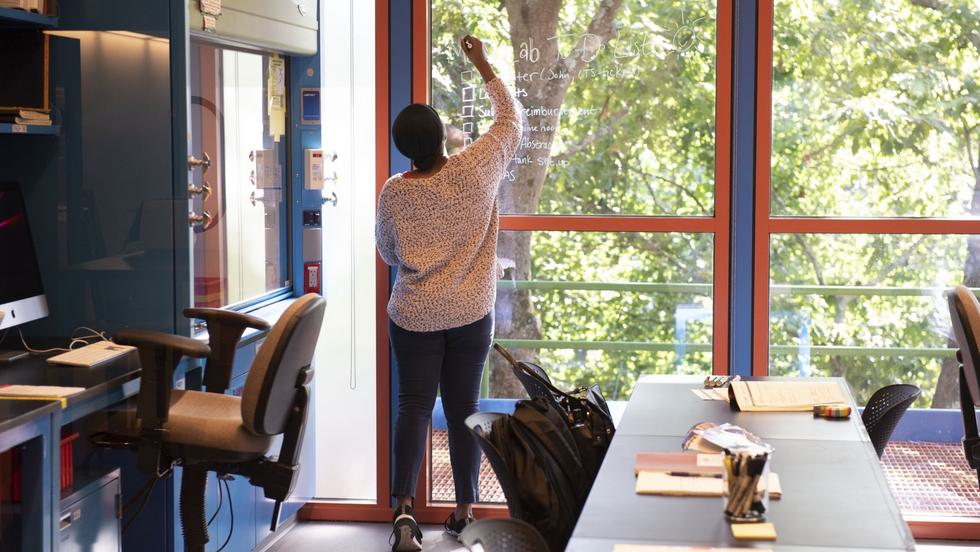
Students learning biology, chemistry, environmental studies, and geosciences benefit from new interdisciplinary labs that branch off from the Chao Foundation Innovation Hub. These glass-fronted teaching and research spaces include the Food Sciences Lab, where students experiment with food harvested from Wellesley’s Edible Ecosystems gardens, the Field Sciences Suite, and the Wet Studio Lab.
Research highlights
-

In Professor Malia Wenny’s materials chemistry research group, students synthesize and characterize porous materials that could help mitigate climate change. Using gas adsorption and powder X-ray diffraction measurements, students study how the structure of a material affects its ability to capture, store and deliver gas molecules.
-
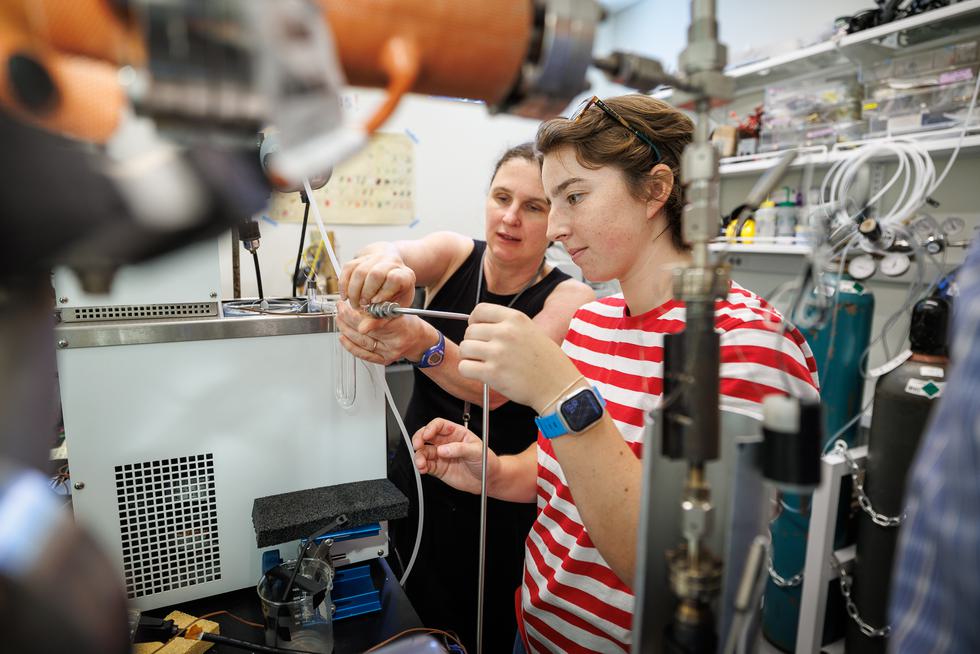
Professor Rachel Stanley collaborates with students on projects using naturally occurring gases in the ocean as tracers of climate change processes. Students often take weeklong research cruises with Professor Stanley as part of the Northeastern Shelf Long-Term Ecological Research Project. After using an equilibrator inlet mass spectrometer to collect thousands of gas measurements, they examine how phytoplankton and other organisms in the ocean are cycling carbon dioxide.
-
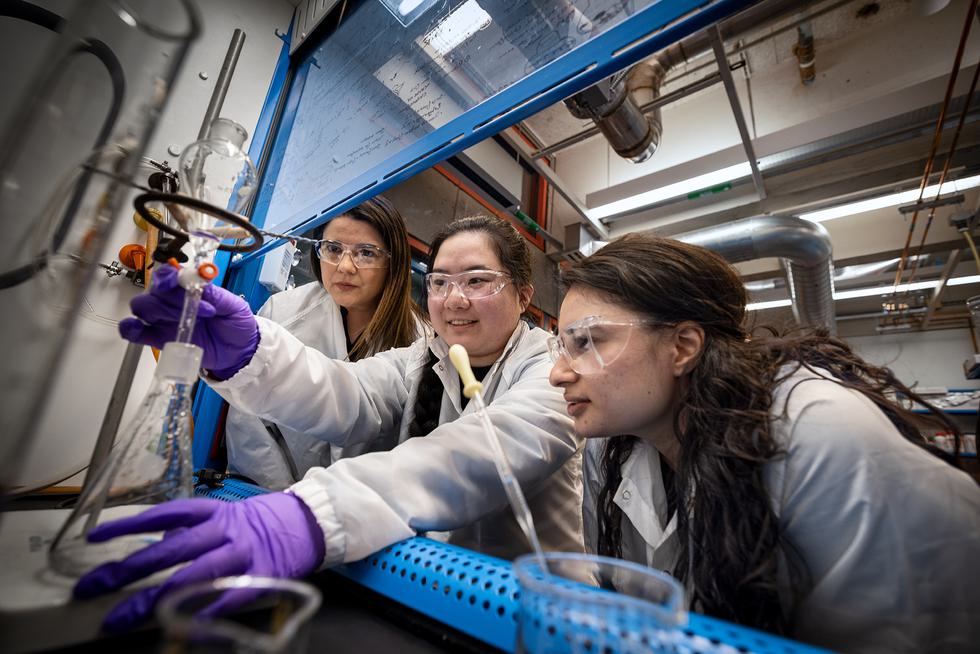
Students in Professor Dora Carrico-Moniz’s lab learn and apply techniques of organic synthesis to prepare novel compounds of medicinal importance, such as anticancer agents and therapeutic agents against hepatitis C, as well as in vitro assays to evaluate their biological activity (potency, selectivity, etc).
-

Kennedy Barnes ’25 and Qin Tong Wu ’24 are working in Professor Christopher Arumainayagam’s lab, in collaboration with Professor of Physics James Battat, to explore the relative roles of low-energy electrons and photons in forming interstellar prebiotic molecules, whose delivery to Earth may have played a role in the emergence of life.
-
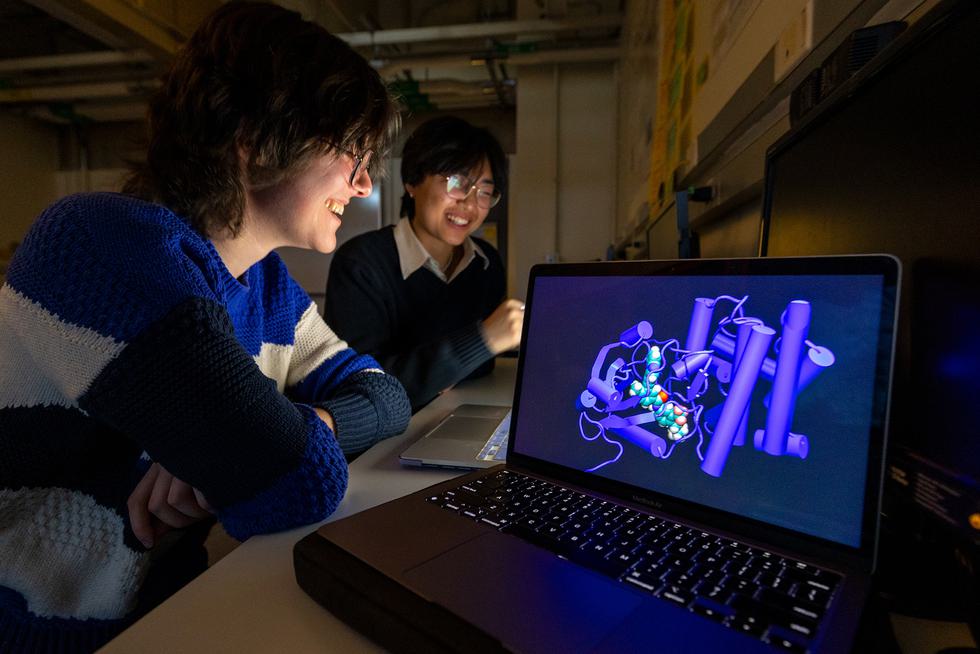
Ongoing collaboration between students in the labs of professors Mala Radhakrishnan and Don Elmore has focused on the computational design and experimental testing of more active antimicrobial peptides (AMPs). AMPs are potential therapeutic alternatives in the ongoing fight against increased bacterial resistance to conventional antibiotics.
-
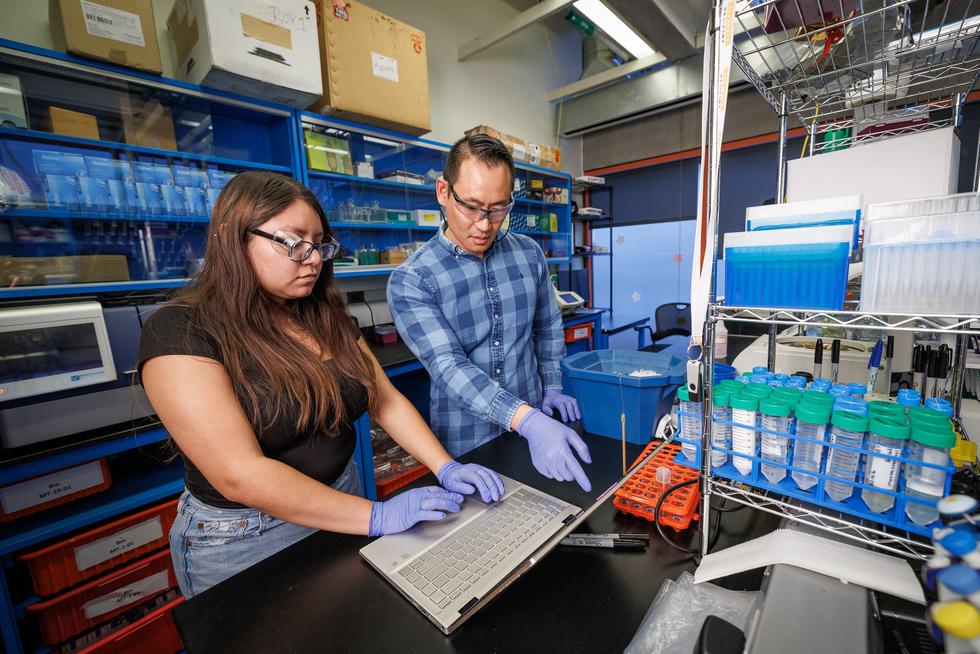
Students working with Professor Mathew Tantama use techniques of protein engineering to develop genetically encoded biosensors. From single molecules to whole living cells, the biosensors are used to understand metabolism and signaling in models of neurodegeneration.
Opportunities and community
We are dedicated to equity, engagement, and belonging, and we offer many concrete opportunities for all students, including those new to chemistry, to join us as valued and respected members of our department.
-
Peer support
Students support each other through peer-to-peer mentoring and Chem Cafe. Through supplemental instruction and laboratory teaching assistant positions, students enrich their education and build community.
-
Research mentorship and funding
We offer exceptional support for student research. Whether they are new to research or are experienced seniors working on a thesis, students can access abundant financial and academic assistance. Our faculty advise students on research assistant positions as well as programs and initiatives, at Wellesley and beyond.
-
Chemistry Society
Chemistry Society is a student-run organization where students have the opportunity to meaningfully engage with their peers and fellow majors. They host many fun events each semester, including Bedtime Stories, Mole Day, Study Breaks, and Registration Info Sessions. These events provide a welcoming space for students to chat with professors, have fun with peers, and build a sense of community with the chemistry department.
Beyond Wellesley
Beyond Wellesley
Many chemistry grads work as researchers in academic, government, or industry labs, including biotech and pharmaceuticals. Others pursue careers in education, health care, public health, art conservation, law, business management, and finance.
Recent Employers