Music
Academic Department Introduction
The Music Department offers a highly regarded academic program and wide range of outstanding performance activities, creating an ideal environment for students to combine serious musical study with a traditional liberal arts curriculum.
For students who wish to undertake focused exploration of music history, theory, composition, ethnomusicology, digital media, experimental music, and performance practice, our academic curriculum includes programs for a music major or minor. For those who wish to take music as an elective, numerous course offerings require no special background.
Our department comprises three programs: the academic program; the performance program, which welcomes students of all levels to take lessons and participate in ensembles; and our concert series, which brings world-class musicians and artists to campus to present their work and engage directly with students.
Learning goals
- Read, understand, and interpret music.
- Recognize specific styles of composers and performers, and identify the progression and evolution of music in space and time.
- Cultivate creativity with other performers and collaborate with an accompanist, an ensemble, or in chamber music.
- Find one’s unique style within the performing medium, such as improvisation, and communicate and express emotion though the voice or learned instrument.
- Use music technology to manipulate sound and create musical compositions, including the production of music in concert, exhibition, and multimedia performance.
Programs of Study

Music major and minor
Students will demonstrate and describe a wide variety of performance practices in styles encompassing classical, jazz, digital, and various world traditions.

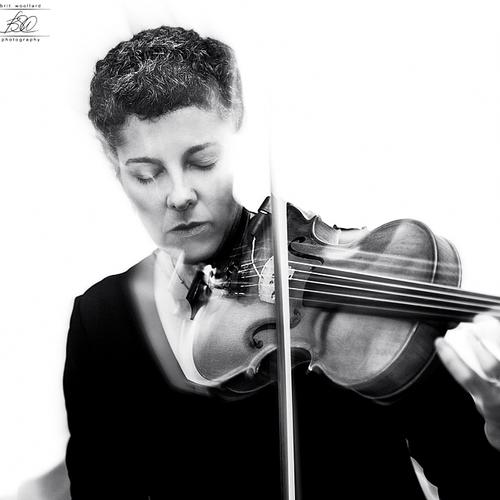
Performance program
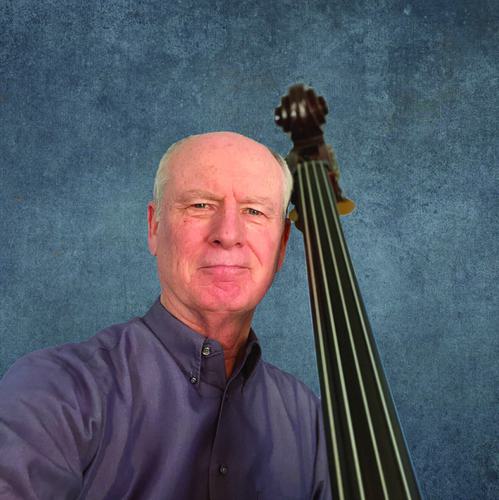
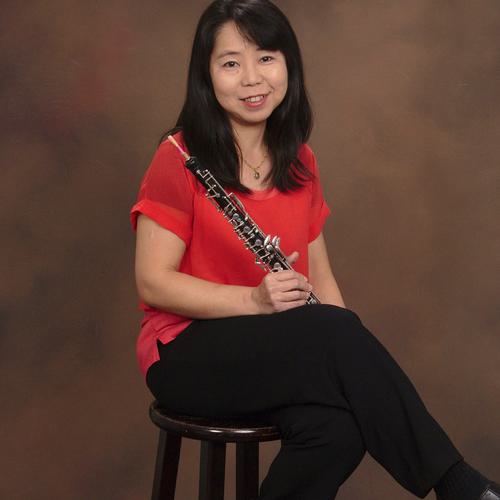
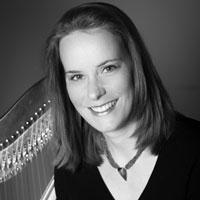
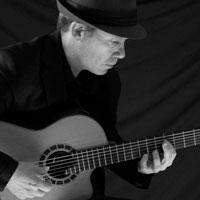
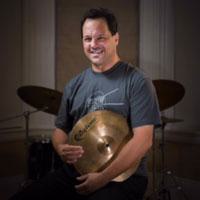
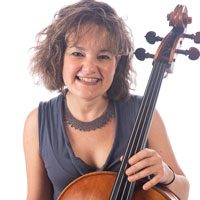
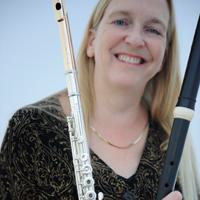
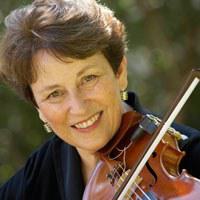
Students who have a passion for playing music can take private lessons and join ensembles regardless of their prior musical experience.





















Course highlights
Songwriting
MUS111
Songwriting is one the most powerful and direct ways in which we can process life and emotions. The purpose of this course is to gain the tools that would allow students to express themselves eloquently through words and music. As such, the course does not assume knowledge of music theory or notation. We will learn about the different ways to tell a story and elicit emotions from the listener. The course will offer analysis of current and historic songwriting trends. We will put an emphasis on the craft and art of songwriting over the raw song product. Students will record demos of songs and will perform their compositions in class.
-
Introduction to Ethnomusicology: The Anthropology of Music
MUS245
What happens when we study music and sound from an anthropological framework? Ethnomusicology, or the cultural study of music and sound, seeks to do just that. Through a hands-on approach to music research, this course has three aims: 1) to give students the opportunity of doing ethnographic research in a local community; 2) to explore key concepts pertaining to ethnomusicology and the anthropology of sound; 3) to work together to create a good working atmosphere in which students can share ongoing research with each other. Students will gain experience doing fieldwork as participant observers; taking notes and writing up field journals; recording and transcribing interviews; and conducting secondary research online and in the library. Each student will conduct regular visits to a local music group or community of their choice. Past projects have focused on Senegalese drumming, musical healing circles, and hip-hop dance groups. The semester will culminate in a final presentation and paper (8-10 pages) based on the student’s research. (ANTH 235 and MUS 245 are cross-listed courses.) -
Topics in Music History I Tpc: Global Music in an Age of Empire
MUS200
Topic for Spring 2026: Global Music in an Age of Empire. The early modern period (1500–1800) coincides with the first age of European overseas colonialism and the rise of the major seaborne empires to global dominance. Spanish, Portuguese, Dutch, French, and English forces seized land in the Americas, Africa, and Asia and established colonies and commercial outposts. Global music history elucidates the processes that affected the musicking of the colonizers and the colonized. This course examines the impact of world exploration on the music of the Americas (North America, Mexico, Bolivia, and Peru), Africa (Ghana, Zambia, Nigeria), and Asia (Thailand, the Philippines, Japan, Korea, China), and the resulting repercussions on European music-making.
Music for all
-

Wellesley College Concert Series
Spanning genres from classical and jazz to world, electronic, and early music, the Concert Series features live performances by distinguished guest artists, performance faculty, and faculty-directed student ensembles. With a mission to use live performance to strengthen musical learning and appreciation of all that music offers, the series enhances our curriculum and the cultural vibrancy of the College.
Places and spaces
-

Jewett Auditorium
The 320-seat Jewett Auditorium hosts music performances, lectures, symposia, and student shows. It contains a full complement of sound, lighting, recording, and playback equipment. -

Sargent Salon
Our Sargent Music Salon is a beautiful chamber music hall used for classes and student recitals. -

Grand Hall
Primarily used as a large ensemble rehearsal space, the Grand Hall also holds student recitals and faculty chamber music concerts. -

Music library
Containing a rich, diverse collection of Western classical music, jazz, world music, musical theater, and popular music, the library has over 10,000 CDs of every kind of music and collections of music online, available 24/7 to the Wellesley College community. -

Practice rooms
We have 22 practice rooms, most of which contain Steinway grand pianos. -

Sound lab
Providing state-of-the-art workstations for computer music composition, keyboard harmony, and theory instruction, the lab serves as both classroom and computer lab.
Research highlights
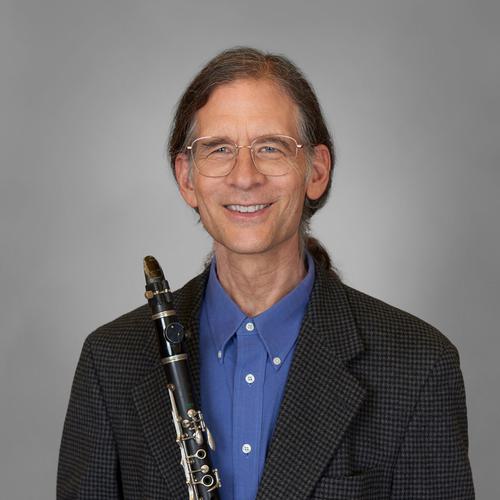
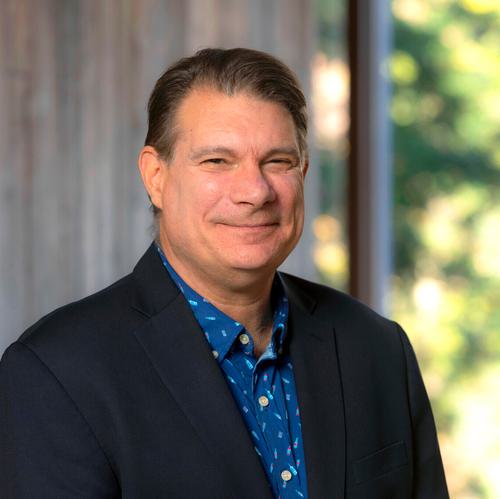
Our faculty is composed of academics and musicians whose credentials include concerts and shows at acclaimed venues, collaborations with music luminaries, recordings, and live broadcasts. They also teach at local conservatories and music schools.
-

Professor Gurminder Kaur Bhogal’s research focuses on relationships between music and the visual arts, most recently in Claude Debussy’s Clair de Lune (Oxford University Press, 2018).
-

Professor Kaleb Goldschmitt’s book, Bossa Mundo: Brazilian Music in Transnational Media Industries (Oxford University Press, 2020), studies the moments of popular breakthrough for Brazilian music among English-speaking people in the United States and the United Kingdom.
-
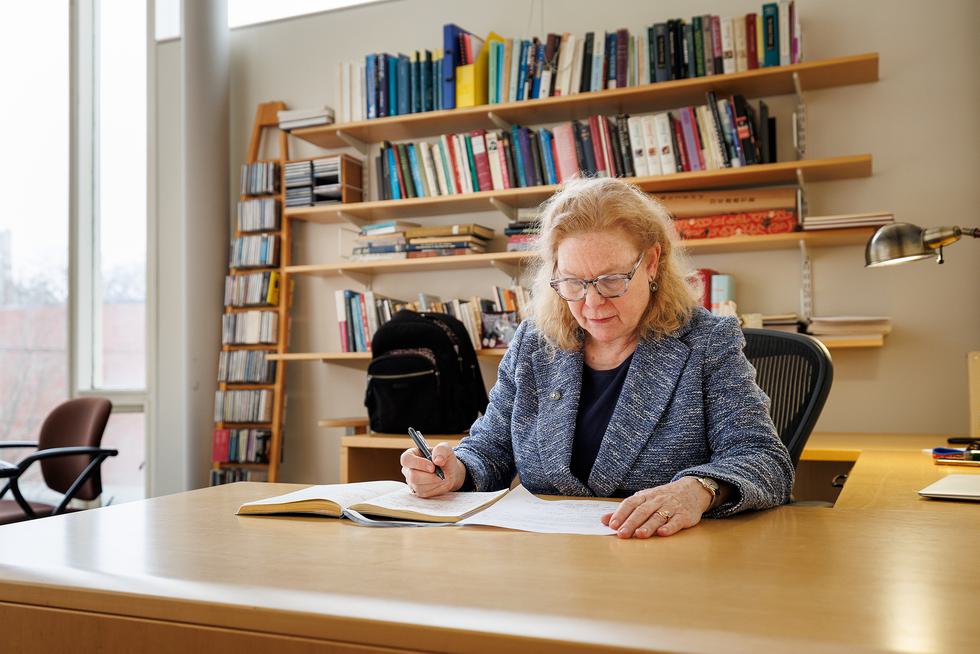
To accompany Professor Claire Fontijn’s article on 17th-century vocal music by Barbara Strozzi and Antonia Bembo, a student research assistant transcribed musical examples from manuscript sources using the Sibelius software package. The article has recently been published in a multilingual collection, Barbara Strozzi (1619–1677): Music and Discourse in Seicento Venice.
Opportunities
-
Performing ensembles
Ensembles, directed by faculty members, include the Brandeis-Wellesley Orchestra, the Chamber Music Society, Wellesley College Choir, Chamber Singers, Collegium Musicum, Wellesley BlueJazz Ensemble Program, Yanvalou Drum and Dance Ensemble, and the Guild of Carillonneurs.
-
Private instruction
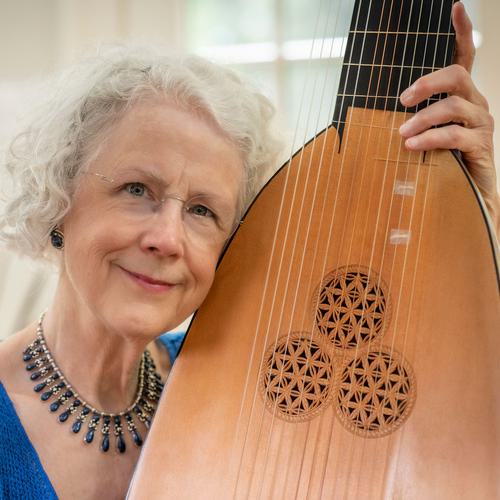
We offer private instruction in voice as well as a wide variety of instruments, in classical, jazz, and world music genres.
-
Honors concert
Each spring, we host a concert honoring the immensely talented student musicians in our performance program. Performers are chosen from across all disciplines and instrumental groups to present their recent repertoire.
-
Instrument collection
We offer use of a vast musical instrument collection that includes 39 pianos, an assortment of modern orchestral instruments, guzheng, pipa, harmonium, and a collection of African drums. There is also a collection of early Western keyboard, string, and wind instruments, including a fortepiano, harpsichords, violas da gamba, Baroque and Renaissance flutes, and a dulcian. Houghton Chapel features the Fisk Organ, and our 32-bell carillon is located in Galen Stone Tower atop Green Hall.
Beyond Wellesley
Beyond Wellesley
Many of our graduates pursue careers related to music—playing, performing, recording, teaching—with some earning advanced degrees. Whatever their field, music continues to play a significant role in their work.
Recent Employers







106 Central Street
Wellesley, MA 02481